Caravaggio's Light: The Secrets of the Contarelli Chapel
Step away from the crowds near Piazza Navona, drop a coin into a small box, and come face to face with the revolution of Western art — three Caravaggio masterpieces that changed painting forever.
Close your eyes and imagine stepping away from the bustling crowds near Piazza Navona. You enter a quiet, dimly lit church. You walk toward a small chapel on the left, drop a coin into a small box, and suddenly — light. This is the moment you come face to face with the revolution of Western art: the masterpieces of Michelangelo Merisi, known as Caravaggio.
Practical Information
- Address: Piazza di S. Luigi de' Francesi, 00186 Roma RM, Italy.
- Opening hours: generally 9:30 AM – 12:45 PM and 2:30 PM – 6:45 PM (always check for religious services).
- Entry: free — bring a €1 or €2 coin to light up the chapel.
A French corner in the heart of Rome
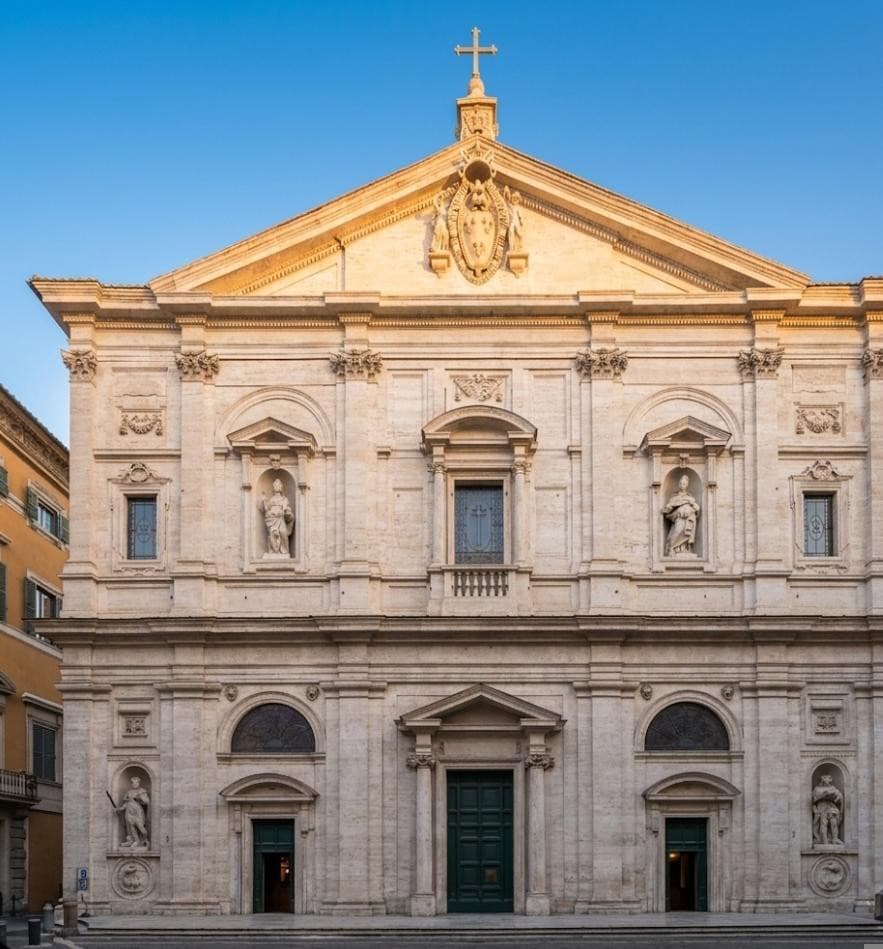
The Church of San Luigi dei Francesi (Saint Louis of the French) has been the national church of France in Rome since 1589. While its golden ceilings and baroque facade are breathtaking, the world comes here for one specific corner: the Contarelli Chapel.
The chapel was commissioned by the heirs of the French Cardinal Matthieu Cointerel (known in Italy as Contarelli). He had purchased the chapel in 1565 but died before seeing it decorated. After years of delays and a failed attempt by the artist Cavalier d'Arpino, the contract was awarded to a young, rebellious Caravaggio in 1599 — his first major public commission and the one that would change the history of art forever.
1. The Calling of Saint Matthew (1599–1600)
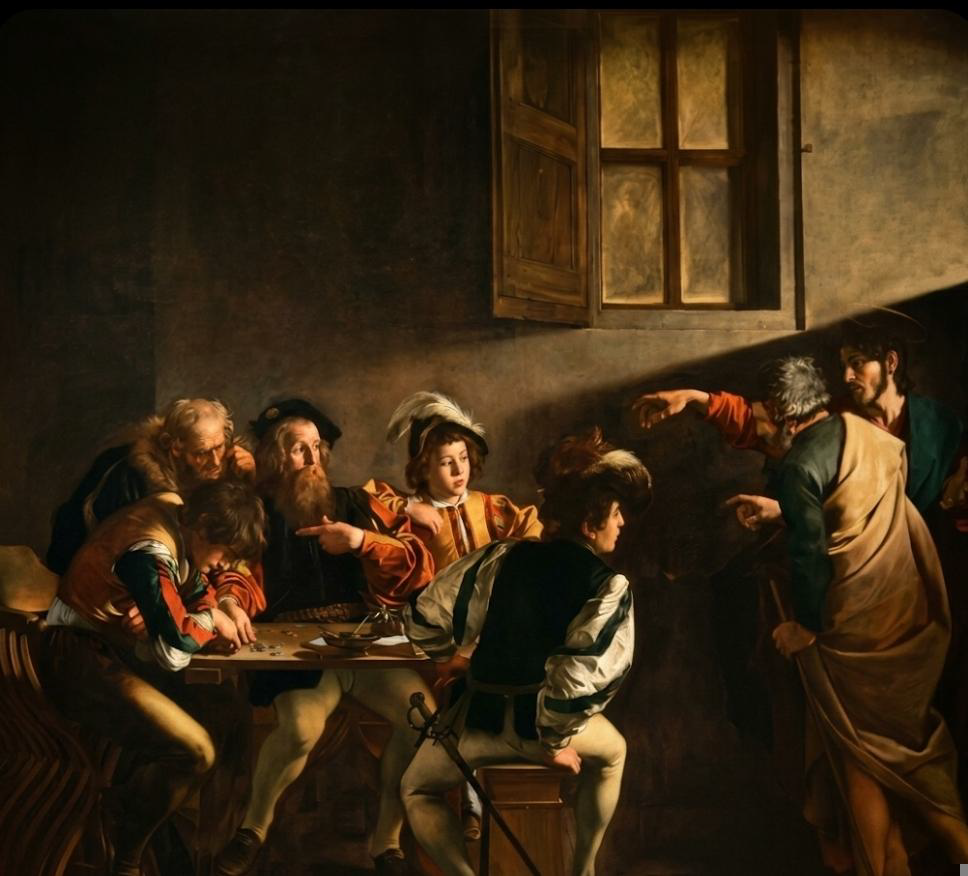
On the left wall, we see the moment that changed a tax collector's life.
- Divine light: notice the beam of light coming from the upper right. It doesn't come from a lamp or the sky, but follows the actual physical window of the chapel. It represents the 'Grace' that hits Matthew as Christ points his finger at him.
- Hidden anecdote: look at Jesus' hand. It is an exact mirror of Adam's hand in Michelangelo's Creation of Adam in the Sistine Chapel. Caravaggio was saying: Christ is the 'New Adam' who brings life back to man.
2. The Martyrdom of Saint Matthew (1599–1600)
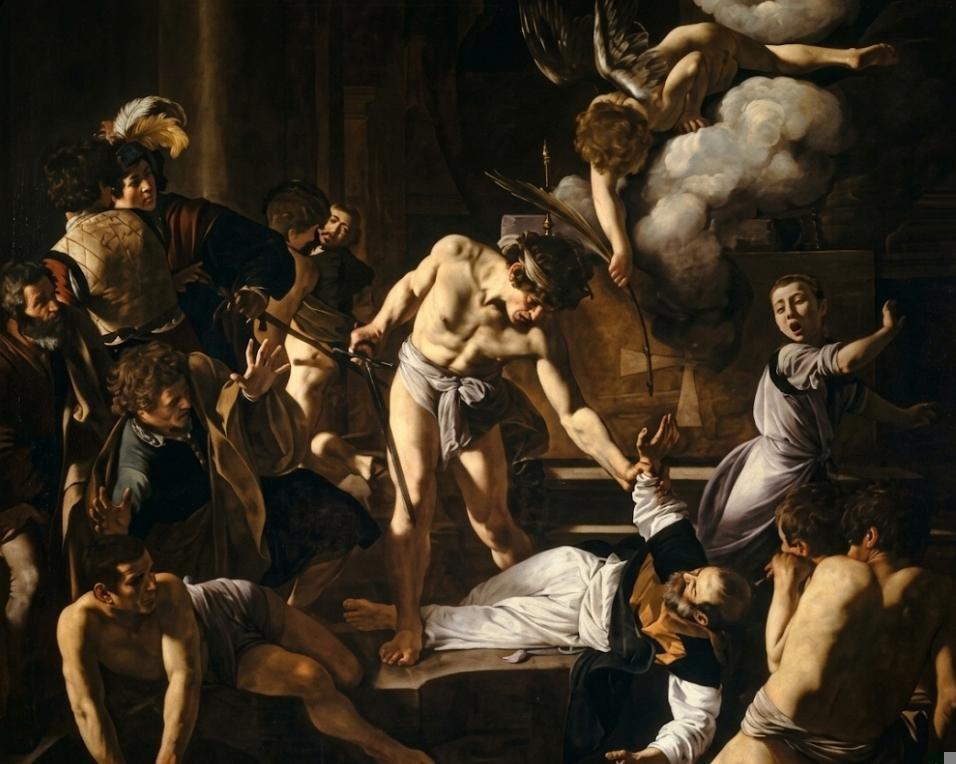
On the right wall, the scene is pure chaos and drama. It depicts the saint's death in Ethiopia.
- Self-portrait: in the background, on the left, a bearded man with a sad, worried expression watches the scene. That is Caravaggio himself — a witness to the tragedy, unable to stop the violence.
- The struggle: X-ray analysis shows he painted and repainted the scene multiple times before finding this dynamic, explosive composition.
3. The Inspiration of Saint Matthew (1602)
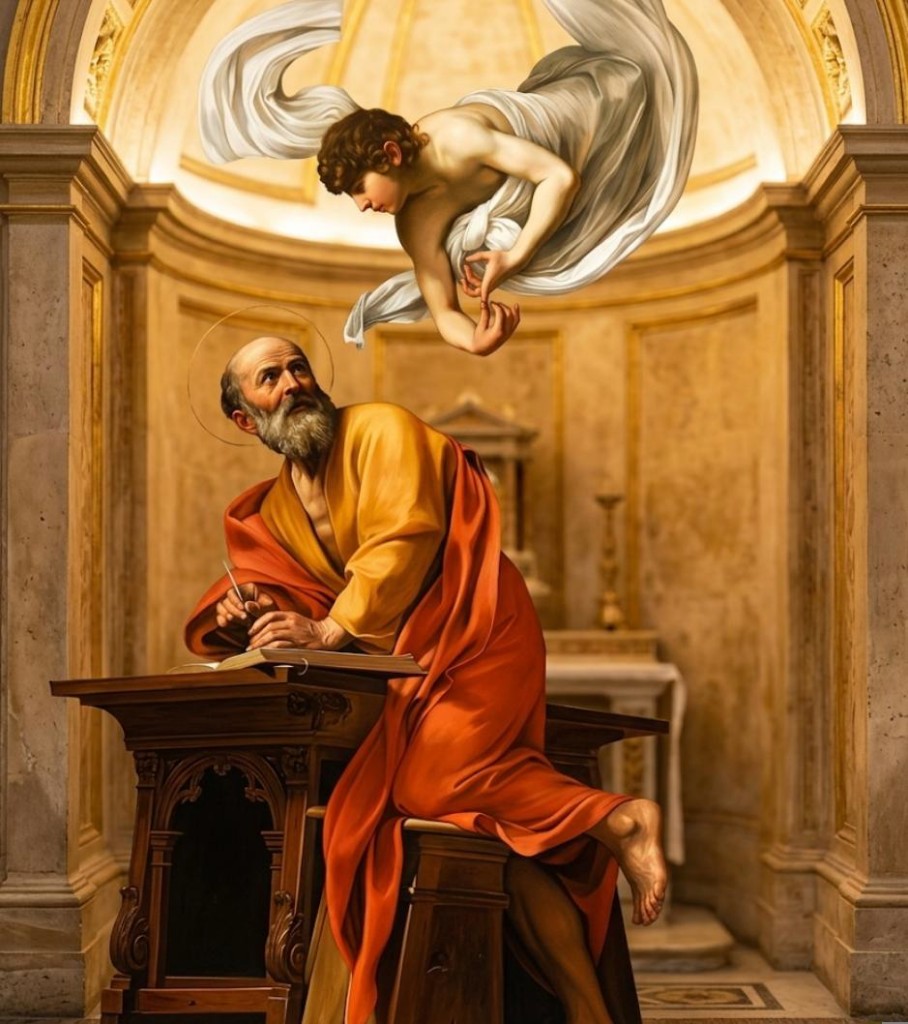
The central painting shows the Saint writing his Gospel, guided by an angel.
- The 'refused' painting: this is actually the second version. The first (Saint Matthew and the Angel) was rejected because Matthew looked 'too poor and illiterate,' with dirty feet and the angel physically pushing his hand. Caravaggio had to paint this more 'dignified' version, where the angel stays at a respectful distance.
- Realism: look at the stool Matthew is leaning on. It's tipping over the edge of the canvas, almost falling into our space. Caravaggio wanted the viewer to feel like part of the scene.
Shadow and Grace
Caravaggio didn't paint saints as ethereal beings; he painted them as real men, with dirty feet, worn clothes, and troubled souls. Walking into San Luigi dei Francesi is not just a visit to a museum — it is an encounter with the raw, human side of the divine.